
English To Kiswahili Translation: What You Need to Know Before You Hire Anyone
Picking the wrong translator can cost you a contract, a visa application, or a client's trust. That's the blunt truth behind English To Kiswahili Translation, a service that sounds simple until you realize how much nuance sits inside a single Swahili sentence. This guide walks through what quality translation actually involves, where people go wrong, and how to choose a partner who won't embarrass you in front of a Kenyan business partner or a Tanzanian court clerk. By the end, you'll know exactly what to look for and what to avoid.
Why Kiswahili Translation Matters More Than People Think?
Swahili isn't a niche language. It's spoken by well over a hundred million people across East Africa, and it carries official status in Kenya, Tanzania, and Uganda. A business email that reads as friendly in English can land as stiff or even rude once translated word for word into Kiswahili, because the language leans on politeness markers and context that English simply doesn't have.
That's where English To Kiswahili Translation stops being a nice-to-have and becomes a real business decision. Get it wrong, and your marketing copy sounds like it came from a robot. Get it right, and you sound like you actually understand the region you're trying to reach.

The Cultural Layer
Translation isn't swapping words. A skilled linguist adjusts idioms, tone, and formality so the message lands the way it was intended, not just the way it was written.
What's Typically Involved in a Professional Translation?
A serious translation project usually includes:
Initial review of the source document for tone, audience, and purpose
Translation by a native or near-native Kiswahili speaker
A second-pass edit by an independent reviewer
Formatting to match the original document's layout
A final proofread before delivery
Skipping the second-pass review is one of the fastest ways a project goes sideways. Even strong translators miss small errors when they're the only set of eyes on the text.
Best Options Available Today
You generally have three paths: freelance translators, agency services, and AI-assisted tools with human review layered on top. Freelancers can be excellent for casual or personal documents. Agencies tend to shine on larger projects with tight deadlines. Hybrid services, where technology speeds up the first draft and a human polishes it, often deliver the best balance of cost and accuracy.
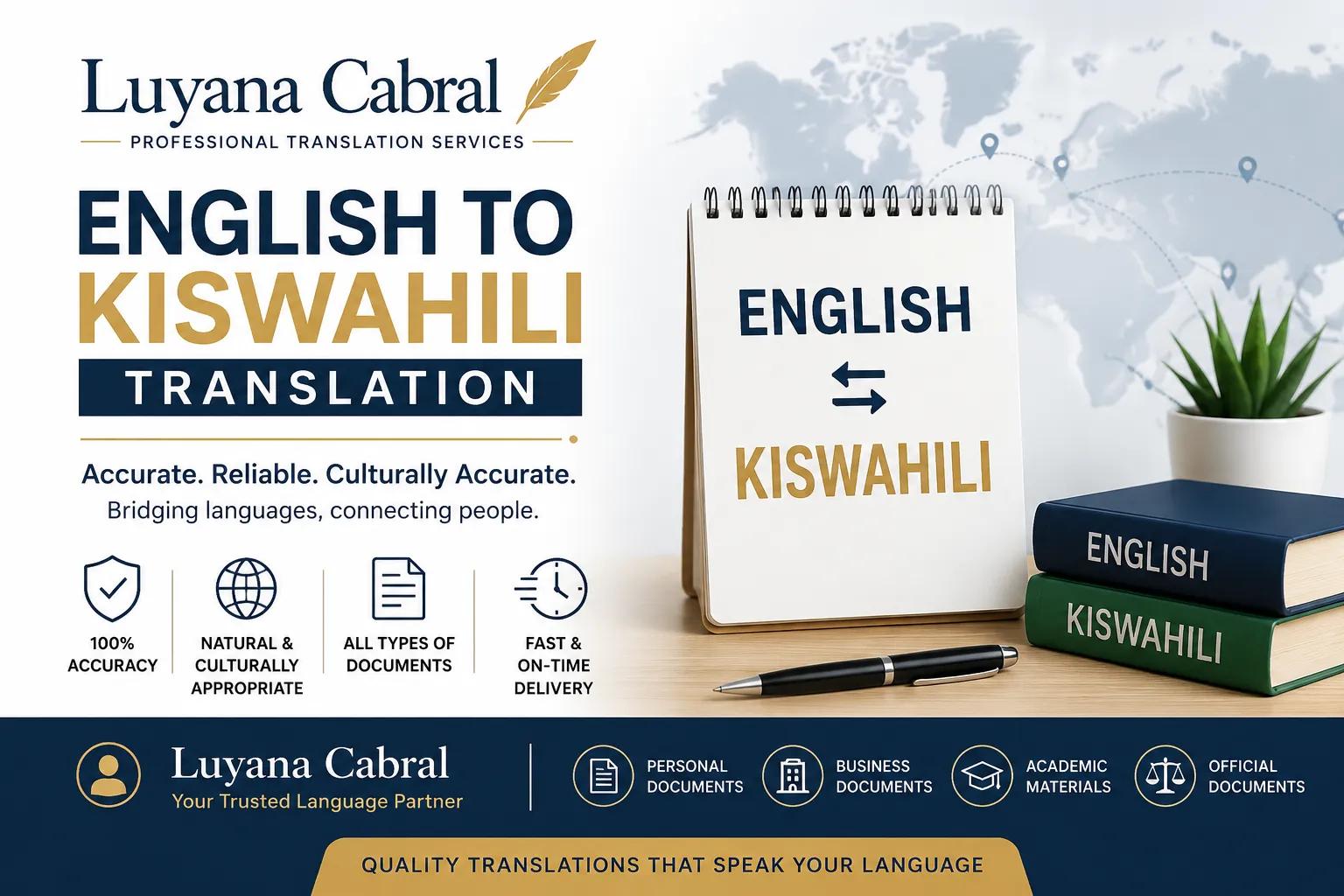
Luyana Cabral has built a reputation around that hybrid approach, particularly for clients who need both speed and precision without sacrificing either one.
Timing and Planning Considerations
Rushed translations are where quality breaks down. A single page of dense legal text might take a translator an hour or more to handle properly, not because they're slow, but because accuracy in Translation Services For Official Documents requires checking terminology against legal precedent, not just dictionaries.
Plan for:
At least 24 to 48 hours for standard documents
Additional time for notarization if required
Extra buffer for documents needing certified translation for immigration or court use
Advantages Over Machine Translation Alone
Free tools have improved, no argument there. But they still stumble on idioms, regional dialects, and anything with legal weight. A human translator catches the difference between formal and informal registers, something a machine still gets wrong more often than it should.
If your project also touches Lusophone markets, the same logic applies. Finding the Best Translator English To Portuguese matters just as much when the stakes involve contracts or medical records, where a mistranslated clause isn't just embarrassing, it's expensive.
Practical Tips
Ask for a sample translation before committing to a large project.
Confirm whether the translator specializes in your document type: legal, medical, marketing, or technical.
Request a translator familiar with the specific Kiswahili dialect used in your target country, since Kenyan and Tanzanian usage can differ.
Always request a final proofread, even for short documents.
Common Mistakes to Avoid
Rushing the process tops the list. Right behind it: assuming any Kiswahili speaker can translate professionally, which isn't true anymore than any English speaker could edit a novel. Skipping certification for official paperwork is another frequent misstep, one that can delay visa or court submissions by weeks.
Who This Is Ideal For
This service fits businesses expanding into East African markets, NGOs working across Kenya and Tanzania, students applying to regional universities, and individuals handling immigration paperwork. If your document needs to hold up under scrutiny, whether that's a judge, an immigration officer, or a new business partner, professional help isn't optional.
Choosing the right partner for English To Kiswahili Translation doesn't have to be complicated once you know what questions to ask and what red flags to watch for. Whether you're translating a single certificate or an entire website, working with someone who understands both the language and the culture behind it makes all the difference. Take the time to vet your translator properly, and the results will speak for themselves.